First, here again are those Elements of Fiction.
And here are...
SOME COMMON CRITIQUE PITFALLS
Psychologizing. When a reader “psychologizes” he-she analyzes characters as if they are real people. Speculating on what they think, how they feel, or what they would (or should) do in a certain situation, not as characters but as real-life human beings. A real-life mother, kid, horse, space-alien “wouldn’t do that.” Or, of course, he-she-it must feel this way or that way because that’s how “most people” would feel in that situation. A story’s job is to create a ground situation (or an “atmosphere” for you lyrical, dreamy types) that exists on its own terms. A reader’s job is to figure out what those terms are and then judge the story according to the standards the story sets for itself. The question isn’t what would happen “IRL.” The question is what would happen in this story.
Contradictions. Harry Truman, thirty-third President of the United States, once said, “Give me a one-armed economist!” He was venting his frustration over economic advisors who would offer advice and then say, “But on the other hand…,” contradicting themselves in the same breath, just to hedge their bets. I say, “Give me a one-armed critiquer!” Here’s what I see a lot: “I really like how you [make XYZ writerly move]. But the fact that you [make XYZ writerly move] really throws me off sometimes.” Which is it?
Faux Kindness :) This one is a subset of Contradictions. You give several paragraphs about how you don’t understand anything in the story followed by, “But I really liked it. Good job!” Or “I know you can do it!!” Notice the exclamation points. I’m all about the kindness -- really I am. I’d prefer excess kindness to excess meanness. (Or any meanness, actually.) But the best kind of kindness is empathy, and that requires a certain measure of authenticity.
Faux Outrage! There’s a lot of things to be outraged about in this world. A critique story is never one of them. One big reason to resist “Faux Outrage” is that it often leads to…
Teacher-speak. I studied writing and literature for a total of ten years as an undergraduate and graduate student. Besides teaching at ASFA for the last seven years, I spent six additional years teaching writing and literature at two different universities. I have been an editor at three different magazines. What’s with the resume, you ask? Think about how often I command you to do something in your writing. Or not to do something. Not very often. The more time I spend reading, writing, and thinking about writing, the less I think I know about any of it. In my experience, there is a direct correlation between humility and writerly insight.
Missing the Forest for the Trees. These stories are in the initial draft stage. We’re thinking big-picture here. Try to focus on the “Elements,” starting with Intention. Ask yourself: “What’s this story trying to do?” Then give feedback as to whether it’s fulfilling that intention in your reading experience.
Not Le Mot Juste. Voice is a matter of personal idiosyncrasy. There are times when a writer is using a word incorrectly -- i.e. it doesn’t mean what they seem to think it means. Often, though, critiquers question a word choice just because it’s not a word they would’ve chosen. Leave room for a writer’s unique lexicon.
Typos and Omissions. Again, this is an initial draft. There are going to be a few rough edges. Try to resist running through it with a fine-tooth comb. In my experience, critiquers who comment on grammar and other sentence-level issues are very often -- very often -- wrong. If you see a consistent surface level error, make a comment in your endnote, something like: “I noticed what I thought were a few comma splices like the one I marked on p. 1.” Then leave it to the writer to go back and do the copyediting.
Strikethroughs, Abbrev., and Onomatopoetics. “Awk.” “Ha ha.” Don’t expect the writer to know what you mean by these shorthand notes. Spell it out and justify your comments -- and not as a teacher but as a fellow writer.
Monday, May 11, 2009

Friday, May 8, 2009
Book Report Links: Day Five
Carmen
Urashima Tarō (浦島太郎)/Read Real Japanese: Short Stories by Contemporary Writers, Michael Emmerich, ed.
Olivia
Breaking Her Fall by Stephen Goodwin
Hannah
Peter Pan by J.M. Barrie
Urashima Tarō (浦島太郎)/Read Real Japanese: Short Stories by Contemporary Writers, Michael Emmerich, ed.
Olivia
Breaking Her Fall by Stephen Goodwin
Hannah
Peter Pan by J.M. Barrie
Thursday, May 7, 2009
Book Report Links: Day Four
Lauren
Pretties by Scott Westerfeld
Lily
The Shining/On Writing by Stephen King
Ceri-Lune
The Magician's Nephew by C.S. Lewis
Pretties by Scott Westerfeld
Lily
The Shining/On Writing by Stephen King
Ceri-Lune
The Magician's Nephew by C.S. Lewis
Wednesday, May 6, 2009
Book Report Links: Day Three
Natalie
Inuyasha by Rumiko Takahashi
Jessica
Pretty Little Liars by Sara Shepard
Lita
My One Hundred Adventures by Polly Horvath
Inuyasha by Rumiko Takahashi
Jessica
Pretty Little Liars by Sara Shepard
Lita
My One Hundred Adventures by Polly Horvath
Tuesday, May 5, 2009
Book Report Links: Day Two
Jasmine
The Phantom Tollbooth by Norton Juster
Sarah
To the Lighthouse by Virginia Woolf
Laura
Un Lun Dun by China Mieville
The Phantom Tollbooth by Norton Juster
Sarah
To the Lighthouse by Virginia Woolf
Laura
Un Lun Dun by China Mieville
Monday, May 4, 2009
Book Report Links: Day One
Imani
To Kill a Mockingbird by Harper Lee
Julia
The Queen's Fool by Philippa Gregory
Antoinette
Far from Xanadu by Julie Ann Peters
To Kill a Mockingbird by Harper Lee
Julia
The Queen's Fool by Philippa Gregory
Antoinette
Far from Xanadu by Julie Ann Peters
Friday, May 1, 2009
Prompt: Big River

Write something about a great big powerful river. Try to make it work on two levels: 1) literal (use it as a setting for what's happening in the story/poem/essay) and 2) figurative (use it as a metaphor for some bigger idea). A la the river in "The Red Convertible."
OR...
Read your book report book.
Wednesday, April 29, 2009
"The Red Convertible" by Louise Erdrich
Post your response to "The Red Convertible" in the comments section. (E-mail me with your response if you can't post.) In a paragraph or so, indicate what you think about Lyman in this story. Is he different in this story versus "Lyman's Luck"? Also indicate which of these two stories you prefer and why.
Also, for tomorrow, pick a passage from the story (anywhere from a paragraph to a page) that you find noteworthy. Either you think it's particularly well written or you have a question about it. Be prepared to talk about the passage you picked and why you picked it.
Also, for tomorrow, pick a passage from the story (anywhere from a paragraph to a page) that you find noteworthy. Either you think it's particularly well written or you have a question about it. Be prepared to talk about the passage you picked and why you picked it.
Prompt: The Red Convertible

Write something that starts with a character getting in the car above -- in that setting -- and driving it somewhere. Anywhere. It can have one scene. Several scenes. One character. Several. It can be a poem or a story. Work on it for at least 45 minutes. Turn it in when you're done or when class is over, whichever comes first.
Tuesday, April 28, 2009
"Lyman's Luck" by Louise Erdrich
Post your response to "Lyman's Luck" in the comments section. (E-mail me with your response if you can't post.) In a paragraph or so, describe what the story is about -- what's its "intention"? I'm not asking you to summarize the story. Tell me what the point is. Also tell me whether you think the story is interesting? Why or why not? Keep the elements of fiction in mind as you respond.
Sunday, April 26, 2009

Wednesday, April 22, 2009


Monday, April 20, 2009
"The Rug" by Meg Mullins
After reading "The Rug," click here to refresh your memory about the elements of fiction we've talked about so far this semester. In the comments section, post a short paragraph or so about how one of those elements (Beginning, Ending, Details, etc...) relates to "The Rug." If you have trouble posting, e-mail your paragraph to me and I'll post it. We'll talk about the story on Thursday.
On Wednesday morning, check the blog again for that day's writing assignment. I want everybody (even those who have conference drafts due) to complete the writing assignment and put it on my desk by the end of the period.
Also, 7th Grade Folk: be ready to start practicing on Thursday for your upcoming reading. Aim for 7-8 minutes of reading material.
Thanks.
On Wednesday morning, check the blog again for that day's writing assignment. I want everybody (even those who have conference drafts due) to complete the writing assignment and put it on my desk by the end of the period.
Also, 7th Grade Folk: be ready to start practicing on Thursday for your upcoming reading. Aim for 7-8 minutes of reading material.
Thanks.
Wednesday, April 15, 2009
"The Legend of Pig-Eye" by Rick Bass
 Really great short stories often have more than one iron in the fire. By that I mean there's the main plot and there's also a sub-plot. The two are usually connected in some way.
In "The Legend of Pig-Eye," the main plot -- or the central question we want to answer -- has to do with whether or not Mack (the narrator) will win 100 fights and go to New York.
But underlying that question is another, less tangible one. What do you think it is? (Hint: it has to do with Don [and, to a lesser extent, Pig-Eye].) In the comments section, write a sentence or two describing the sub-plot of "The Legend of Pig-Eye."
Book Reports: May 4-8
Here are the due dates for our final in-class "book reports:"
May 4
Imani
Julia
Antoinette
May 5
Jasmine
Hannah
Sarah
May 6
Laura
Jessica
Lita
May 7
Ceri-Lune
Lily
Natalie
May 8
Carmen
Lauren
Olivia
May 4
Imani
Julia
Antoinette
May 5
Jasmine
Hannah
Sarah
May 6
Laura
Jessica
Lita
May 7
Ceri-Lune
Lily
Natalie
May 8
Carmen
Lauren
Olivia
Sunday, March 29, 2009
11.11 WAM (In Case You're Stuck)
You'll notice the multi-genre nature of these invitations:
...Start a story in the present day. A land-line telephone rings in an old house. Let the phone ring. And ring. While it's ringing, write a story in flashback from the perspective of the character who is ignoring the phone.
...Write 25 lines of unrhymed verse about the Birmingham Zoo.
...Write an essay about the cultural significance, as you understand/experience it, of the McDonalds french fry.
...Start a story in the present day. A land-line telephone rings in an old house. Let the phone ring. And ring. While it's ringing, write a story in flashback from the perspective of the character who is ignoring the phone.
...Write 25 lines of unrhymed verse about the Birmingham Zoo.
...Write an essay about the cultural significance, as you understand/experience it, of the McDonalds french fry.
Sunday, March 22, 2009
Stretch-Run Syllabus
Conference Drafts
Each of you will submit one more conference draft between now and Apr 24. The due dates are in the righthand column. They are also here:
· Mar 27: Julia / Antoinette / Hannah..........Conference → Apr 3
· Apr 3: Natalie / Olivia / Ceri-Lune..........Conference → Apr 10
· Apr 10: Carmen / Jessica / Lita..........Conference → Apr 17
· Apr 17: Lily / Lauren / Laura..........Conference → Apr 24
· Apr 24: Imani / Sarah / Jasmine..........Conference → May 1
Jury Portfolio
Your jury will consist of one revised and fully polished story. This must be one of the two stories you submitted for conference. I’ll give you a handout that explains how I’ll evaluate juries.
Weekly Schedule
In general, Mon-Wed-Fri will be focused on writing. We’ll start those days with a five-minute “Flash-or-Flush” prompt. That will be followed by a 45-minute stretch of uninterrupted writing. Instead of saving that work and submitting it at the end of the week, I’ll check your word count each writing period. The requirement is that you write for the full 45 minutes. The goal is to get to 500 words (11.11 words per minute!). As long as you’re writing the whole time, you don’t have to worry about whether you get to 500 words or not. On the other hand, if you get there in under 45 minutes, keep going. The most important thing is the uninterrupted time you spend writing, not the word count.
Tue-Thu will be focused on reading and elements of craft. Tuesdays we’ll read an exemplary short story together aloud and discuss it. On Thursdays we’ll also read: this time a novel the whole class will be reading together.
Readings
Senior Readings are starting up this Friday. The schedule is in the righthand column and here:
· Mar 27: Rachele Hatter and Persephonae Velasquez
· Apr 10: Elaine Crutchley and Hannah Irvin
· Apr 17: Michael Lambert and Erika Wade
All senior readings start at 7:00 p.m. Attendance is required. Absences must be prearranged or excused.
Your grade-level readings are also coming up. Practices will begin the week prior to your reading.
· Apr 2 (Thu): 9th Grade Reading
· Apr 15 (Wed): 8th Grade Reading
· Apr 28 (Tue): 7th Grade Reading
All grade-level readings start at 3:15 p.m. Attendance is required. Absences must be prearranged or excused.
Each of you will submit one more conference draft between now and Apr 24. The due dates are in the righthand column. They are also here:
· Mar 27: Julia / Antoinette / Hannah..........Conference → Apr 3
· Apr 3: Natalie / Olivia / Ceri-Lune..........Conference → Apr 10
· Apr 10: Carmen / Jessica / Lita..........Conference → Apr 17
· Apr 17: Lily / Lauren / Laura..........Conference → Apr 24
· Apr 24: Imani / Sarah / Jasmine..........Conference → May 1
Jury Portfolio
Your jury will consist of one revised and fully polished story. This must be one of the two stories you submitted for conference. I’ll give you a handout that explains how I’ll evaluate juries.
Weekly Schedule
In general, Mon-Wed-Fri will be focused on writing. We’ll start those days with a five-minute “Flash-or-Flush” prompt. That will be followed by a 45-minute stretch of uninterrupted writing. Instead of saving that work and submitting it at the end of the week, I’ll check your word count each writing period. The requirement is that you write for the full 45 minutes. The goal is to get to 500 words (11.11 words per minute!). As long as you’re writing the whole time, you don’t have to worry about whether you get to 500 words or not. On the other hand, if you get there in under 45 minutes, keep going. The most important thing is the uninterrupted time you spend writing, not the word count.
Tue-Thu will be focused on reading and elements of craft. Tuesdays we’ll read an exemplary short story together aloud and discuss it. On Thursdays we’ll also read: this time a novel the whole class will be reading together.
Readings
Senior Readings are starting up this Friday. The schedule is in the righthand column and here:
· Mar 27: Rachele Hatter and Persephonae Velasquez
· Apr 10: Elaine Crutchley and Hannah Irvin
· Apr 17: Michael Lambert and Erika Wade
All senior readings start at 7:00 p.m. Attendance is required. Absences must be prearranged or excused.
Your grade-level readings are also coming up. Practices will begin the week prior to your reading.
· Apr 2 (Thu): 9th Grade Reading
· Apr 15 (Wed): 8th Grade Reading
· Apr 28 (Tue): 7th Grade Reading
All grade-level readings start at 3:15 p.m. Attendance is required. Absences must be prearranged or excused.
Monday, March 9, 2009
"Book Reports"
As a refresher, here's what I'm looking for in these "book reports":
You're basically telling a roomful of your writer friends about this cool (awful?) book you just read. You DON'T have to summarize the entire plot. Just give the ground situation in a sentence or three, maybe read a short passage (no more than a medium-sized paragraph) to give us a sense of the voice, and tell us what this book has "taught" you about writing. Put this last part in the context of the Elements of Fiction we've talked about in class.
The End.
You're basically telling a roomful of your writer friends about this cool (awful?) book you just read. You DON'T have to summarize the entire plot. Just give the ground situation in a sentence or three, maybe read a short passage (no more than a medium-sized paragraph) to give us a sense of the voice, and tell us what this book has "taught" you about writing. Put this last part in the context of the Elements of Fiction we've talked about in class.
The End.
Wednesday, March 4, 2009
Prompts #19 & #20
In the spirit of the day -- when frugality is prized and the mantra of "reduce, reuse, recycle" has a kind of vocational intensity associated with it -- click here to find the DOZENS of writing prompts we've already encountered. All in one place. It's just like a mini-mall!
Monday, March 2, 2009
The Elements of Fiction
Intention: On some level, we all finish reading a story and ask ourselves -- and the author -- "So what?" Good stories leave you feeling like you can answer that question, like you know why you just read them. Sometimes there's a specific, tangible reason and you can summarize it in a sentence or two. My favorite stories tend to be those that leave me with just an intuitive sense of why I read them. I "feel" why they're important. And they seem to be about a lot of things while maintaining a certain simplicity and accessibility.
Details: In a way, this is the starting point. No matter what, great stories (great writing of all kinds) appeal to the five senses. The absolute best way to do that, hands down, is to use a predominance of interesting nouns and verbs. Adjectives and adverbs tend to be abstract (difficult to touch and taste and hear and smell and see), while nouns and verbs are concrete. You access them through and with your body.
Character: Characters change. At the very least, they have the clear opportunity to change and, for whatever reason, turn it down. Either way, this change (or lost opportunity for change) leads to real consequences for the character, positive and/or negative.
Setting: Setting is sneaky. It's really a support mechanism for two of the other elements, Details and Character. Knowing where in the world the story takes place -- and rendering it in an interesting way -- does more than half of the work in creating believable characters and giving a reader lush sensory details. When you forget your setting, you forget to ground -- literally and figuratively -- your story.
Beginning: All stories start somewhere. Most good ones, in my experience, start with a vibrant sensory image, a compelling action, and they leave me with an open-ended question. Beginnings are supposed to spur you to keep reading, and the combination of those three things (image + action + open question) will almost always do just that.
Ending: And all stories end. Or at least all stories stop. Stories that truly end -- and end well -- have the quality of resonance. When a sound resonates, it echoes for a while after the note has been struck. Think of a bell. There's the initial ding and then there's the sound that issues forth. Sometimes that sound can last a long time after the ding. It's sort of the same with the end of a story. The story comes to a close -- the "ding" -- but a good story lingers with a reader long after she's put it down. Often it helps you to make new connections to other elements of the story, and if you're really lucky as a reader, it helps you make new connections to what it means to be human.
Plot/Organization: All good stories are well-organized and most good stories have some sort of plot. Plot means that every cause has an effect. Somebody does something and that causes another thing to happen. Which causes another thing to happen, and so on. Stories are well-plotted when those causal sequences lead to a significant change in the essential elements of the story. Usually that change occurs in the main character.
Voice: Voice is the most difficult to define element. It's also arguably the most important one, especially if you're going to follow Tenet #4: Make it interesting. Voice is about the idiosyncratic choices you make as a writer. The vocabulary and sentence structures you use. The details you choose to describe. The characters you choose to populate the story and the aspects of them you choose to focus on. Also your thematic preoccupations and obsessions. It is, by definition, subjective. It is how you get "you" on the page.
Details: In a way, this is the starting point. No matter what, great stories (great writing of all kinds) appeal to the five senses. The absolute best way to do that, hands down, is to use a predominance of interesting nouns and verbs. Adjectives and adverbs tend to be abstract (difficult to touch and taste and hear and smell and see), while nouns and verbs are concrete. You access them through and with your body.
Character: Characters change. At the very least, they have the clear opportunity to change and, for whatever reason, turn it down. Either way, this change (or lost opportunity for change) leads to real consequences for the character, positive and/or negative.
Setting: Setting is sneaky. It's really a support mechanism for two of the other elements, Details and Character. Knowing where in the world the story takes place -- and rendering it in an interesting way -- does more than half of the work in creating believable characters and giving a reader lush sensory details. When you forget your setting, you forget to ground -- literally and figuratively -- your story.
Beginning: All stories start somewhere. Most good ones, in my experience, start with a vibrant sensory image, a compelling action, and they leave me with an open-ended question. Beginnings are supposed to spur you to keep reading, and the combination of those three things (image + action + open question) will almost always do just that.
Ending: And all stories end. Or at least all stories stop. Stories that truly end -- and end well -- have the quality of resonance. When a sound resonates, it echoes for a while after the note has been struck. Think of a bell. There's the initial ding and then there's the sound that issues forth. Sometimes that sound can last a long time after the ding. It's sort of the same with the end of a story. The story comes to a close -- the "ding" -- but a good story lingers with a reader long after she's put it down. Often it helps you to make new connections to other elements of the story, and if you're really lucky as a reader, it helps you make new connections to what it means to be human.
Plot/Organization: All good stories are well-organized and most good stories have some sort of plot. Plot means that every cause has an effect. Somebody does something and that causes another thing to happen. Which causes another thing to happen, and so on. Stories are well-plotted when those causal sequences lead to a significant change in the essential elements of the story. Usually that change occurs in the main character.
Voice: Voice is the most difficult to define element. It's also arguably the most important one, especially if you're going to follow Tenet #4: Make it interesting. Voice is about the idiosyncratic choices you make as a writer. The vocabulary and sentence structures you use. The details you choose to describe. The characters you choose to populate the story and the aspects of them you choose to focus on. Also your thematic preoccupations and obsessions. It is, by definition, subjective. It is how you get "you" on the page.
Sunday, March 1, 2009
Wednesday, February 25, 2009
Prompt #18
...Re-write a well-known fable or fairy tale. (Cinderella, Hansel and Gretel, the Boy Who Cried Wolf, Goldilocks and the Three Bears all come to mind, but of course there are others.) Make it contemporary, of our time. Try to also update the moral of the story so that it speaks to current concerns. What if, for instance, Cinderella rejects the notion that, in order to achieve self-actualization, she needs to find a prince at all? Or what if the Boy Who Cried Wolf can't be heard in an attention-deficient world that is overloaded with media messages?
...Start a story thusly: "This is a story about love."
...Write a story with a happy ending.
Look for opportunities to use Balance and Series in your sentences. Also, feel free to use the sparks from yesterday and/or Monday.
...Start a story thusly: "This is a story about love."
...Write a story with a happy ending.
Look for opportunities to use Balance and Series in your sentences. Also, feel free to use the sparks from yesterday and/or Monday.
Tuesday, February 24, 2009
Prompt #17
...Try to mimic Hemingway's style in "Big Two-Hearted River." Use simple sentences and repetition. Pay close attention to minute sensory details. Take it slow. Not much needs to happen, but it needs to feel "profound."
...Write a 250-word sentence that tells a story. Try to make it work as one sentence, as opposed to several sentences separated by commas or dashes or semi-colons.
...Write a story consisting entirely of sentence fragments.
Whatever you write, try to incorporate the concepts of Series and Balance in your sentence structures.
Story Sparks: Tijuana, Mexico. Seals. A street vendor named Fortenbras Izzo. Vulcan. Sunflowers. The Strait of Juan de Fuca Highway. August 3, 2005 in Alabama.
...Write a 250-word sentence that tells a story. Try to make it work as one sentence, as opposed to several sentences separated by commas or dashes or semi-colons.
...Write a story consisting entirely of sentence fragments.
Whatever you write, try to incorporate the concepts of Series and Balance in your sentence structures.
Story Sparks: Tijuana, Mexico. Seals. A street vendor named Fortenbras Izzo. Vulcan. Sunflowers. The Strait of Juan de Fuca Highway. August 3, 2005 in Alabama.

Sentencing: Balance & Series
Balance.*
A pair of phrases or clauses of roughly equal length joined by a comma, semicolon, or conjunction. Another name for balance is "isocolon," a Greek word meaning, roughly, "equal phrases." Choose any of the models below and write a similar sentence of your own.
A string of grammatically identical elements, such as nouns, verbs, or adjectives. Choose any of the models below and write a similar sentence of your own.
*I'm taking this text and these exercises from a book called Moves Writers Make by James C. Raymond.
A pair of phrases or clauses of roughly equal length joined by a comma, semicolon, or conjunction. Another name for balance is "isocolon," a Greek word meaning, roughly, "equal phrases." Choose any of the models below and write a similar sentence of your own.
- The air cools; the puppy's skin is hot. -- Annie Dillard
- We will not rest; we cannot think of anything else. -- Marion Winik
- Words themselves are innocuous; it is the consensus that gives them true power. -- Gloria Naylor
A string of grammatically identical elements, such as nouns, verbs, or adjectives. Choose any of the models below and write a similar sentence of your own.
- That was the language that helped shape the way I saw things, expressed things, made sense of the world. -- Amy Tan
- The preacher preached a wonderful rhythmical sermon, all moans and shouts and lonely cries and dire pictures of hell. -- Langston Hughes
- I don't want yours, I half-screamed at her, and went crazy, tearing up the house, crawling under the couch, yanking out drawers that hadn't been opened in years. -- Marion Winik
*I'm taking this text and these exercises from a book called Moves Writers Make by James C. Raymond.
Monday, February 23, 2009
Subject Headings Are Fun!
A bit of housekeeping: when you submit work via e-mail, please clearly label what it is in the subject heading.
Weekly Pages -- for, well, Weekly Pages.
Conference Draft -- for (you guessed it!) Conference Drafts.
Thank you.
--The Management
Weekly Pages -- for, well, Weekly Pages.
Conference Draft -- for (you guessed it!) Conference Drafts.
Thank you.
--The Management
Weekly Warm-Up: From Stream-of-Consciousness to Straightjacket
This one's in two parts:
Part-the-First. Tell a story, start-to-finish. The only requirement is that you write unfettered, without really even stopping to think. Use one (or more) of the story sparks below if you want. You'll have fifteen minutes. You can't stop typing. I repeat: don't think. Take the story wherever your stream-of-consciousness goes.
Part-the-Second. Tell the same basic story, start to finish, but this time I want you to do it in a ten-line poem. Each line must have ten words -- no more, no less. Oh: and there's a rhyme scheme -- ab ab cd cd ee. You can revise the story however you see fit. This time you'll have thirty minutes.
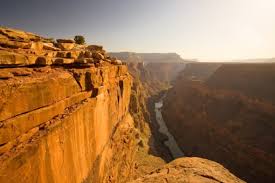
Some story sparks: The Grand Canyon. An accountant named Pauline. Traffic. Des Moines, Iowa. A sitar. A teenager shaving his face for the first time. The 1998 NBA Finals. Boutwell Auditorium. Winter in Alabama. Winter in Las Vegas. Hippos.
Part-the-First. Tell a story, start-to-finish. The only requirement is that you write unfettered, without really even stopping to think. Use one (or more) of the story sparks below if you want. You'll have fifteen minutes. You can't stop typing. I repeat: don't think. Take the story wherever your stream-of-consciousness goes.
Part-the-Second. Tell the same basic story, start to finish, but this time I want you to do it in a ten-line poem. Each line must have ten words -- no more, no less. Oh: and there's a rhyme scheme -- ab ab cd cd ee. You can revise the story however you see fit. This time you'll have thirty minutes.
Some story sparks: The Grand Canyon. An accountant named Pauline. Traffic. Des Moines, Iowa. A sitar. A teenager shaving his face for the first time. The 1998 NBA Finals. Boutwell Auditorium. Winter in Alabama. Winter in Las Vegas. Hippos.


Wednesday, February 18, 2009
Prompt #16: BMoA Visit
...Use your notes/freewrites from the two exhibits as a spark for a story. Remember to consider any (or all) of the following possibilities:
- Think about the art itself as a jumping off point; borrow one of the images and/or subjects in the art you saw and write a story about it.
- Write something set in one of the exhibiting rooms. Think about how to convey that pervasive red in the Renaissance room, for instance. What might happen in such a room? Could be something mysterious, like an art heist, or it could be something mundane, like a security guard making her umpteenth pass through there and finally, as if for the first time, seeing something new in one of the paintings.
- Or you can write something that imagines the life of the artist her/himself. For example, the people in the contemporary art exhibit who dunked their heads in the water. Write a story about those actual people. Who are they? What are they thinking when they're dunking their heads? Are they related? Are they married? What did they do after they dunked their heads? Go for coffee? Make more art? What do they do for Thanksgiving?
Tuesday, February 17, 2009
Prompt #15
...Write a story from a real-life experience you had this weekend. Start it there, anyway. Just recount something that actually happened in full and compelling sensory detail. Then here's the trick: look for an opportunity to jump off from what actually happened and, when that opportunity presents itself, POUNCE! Introduce a new character, a new setting, whatever. The idea is to start from the "truth" and to then bend it (like Beckham) into the "truth of fiction."
...Write a story that has a small blue stone in it.
...Pore over your cache of prompts and expand on one.
...Write a story that has a small blue stone in it.
...Pore over your cache of prompts and expand on one.
Friday, February 13, 2009
Reading Dates Added
Check the righthand column for a list of upcoming departmental reading dates. All of you will be reading at some point in April. You're also expected to be at all the other readings, especially Senior Readings. If you have a conflict, please see me in advance.
Wednesday, February 11, 2009
Prompt #14
Write a scene about three friends. Two of them know something the other one doesn't. There's a good chance this story takes place on an unseasonably warm winter day in Alabama in February. Perhaps James Spann appears in the periphery. Write the scene from the Point of View (POV) of one of the two friends who share the knowledge.
Now write the same scene from the POV of the friend who's out of the loop.
Pick one of the versions as the starting point for a story.
Now write the same scene from the POV of the friend who's out of the loop.
Pick one of the versions as the starting point for a story.
Tuesday, February 10, 2009
Prompt #13

Put this woman in a story. She's an important character but she's not the main character.
[FYI: From here on out, I will mostly be giving you prompts as a back-up plan. You are not required to do them. During our writing time, you can always work on your upcoming conference draft. Or work on whatever other creative writing project you want to work on. Or you can blarg. The only requirement is that you are steadfastly putting words on the page for the full allotment of writing time.]
Sunday, February 8, 2009
A Word About Conference Drafts
Here's what I want when you submit a first draft for conference:
1. The goal is for the story to have a beginning, a middle, and an end. If you don't get all the way to the end of the story, it makes it more difficult to have a productive conference.
2. Don't worry too much about length, but less than 1000 words is probably too short and more than 5000 words is definitely too long. Aim for between five and ten double-spaced pages. Please use 12-point Times New Roman. It's easier on my eyes.
3. Don't forget to use scenes.
4. Two words: Nouns. Verbs.
5. There's no wrong answer. Make a good faith effort and you'll be fine.
1. The goal is for the story to have a beginning, a middle, and an end. If you don't get all the way to the end of the story, it makes it more difficult to have a productive conference.
2. Don't worry too much about length, but less than 1000 words is probably too short and more than 5000 words is definitely too long. Aim for between five and ten double-spaced pages. Please use 12-point Times New Roman. It's easier on my eyes.
3. Don't forget to use scenes.
4. Two words: Nouns. Verbs.
5. There's no wrong answer. Make a good faith effort and you'll be fine.
Wednesday, February 4, 2009
To-Do List
Intro Paragraphs. For Friday, I want you to write the first paragraph for two different stories. Each paragraph should be between 100 - 200 words long. Remember Image + Action + Open-Ended Question.
Cadence Bios. Due today. Post to the Cadence 2009 folder on your desktop. If you have issues, we'll get a senior to help you with them.
Reading Practice. Imani, Carmen, Lauren, and Ceri-Lune. Ha. Just kidding. The real list is: Olivia, Natalie, Lita, Jessica, and Laura. The reading will start at 1:00 p.m. on Friday.
While we're in the Lecture Hall practicing, the rest of you should be working on the above or you can read your book. You should be close to finished with your first book and moving on to your second in the next week or so.
Cadence Bios. Due today. Post to the Cadence 2009 folder on your desktop. If you have issues, we'll get a senior to help you with them.
Reading Practice. Imani, Carmen, Lauren, and Ceri-Lune. Ha. Just kidding. The real list is: Olivia, Natalie, Lita, Jessica, and Laura. The reading will start at 1:00 p.m. on Friday.
While we're in the Lecture Hall practicing, the rest of you should be working on the above or you can read your book. You should be close to finished with your first book and moving on to your second in the next week or so.
Tuesday, February 3, 2009
Prompt #12
Write two different opening paragraphs for the same story. Go back through the prompts you've written so far if you're stuck for ideas. Use the "Image + Action + Open-Ended Question" approach for both, but use different images and actions and questions to start the story. Also use different sentence styles -- for one, use short, simple sentences. For the other write longer sentences with more commas and dependent clauses. Each paragraph should be at least 100 words long.
Monday, February 2, 2009
Prompt #11: Beginnings
Pick one of the following first sentences as the germ of the opening paragraph to a story:
...The Superior Wallcoverings Wildcats were playing in the Little League Championship game and I wanted them to lose."
...Graves had been sick for three days when, on the long, straight highway between Mazar and Kunduz, a dark blue truck coming toward them shed its rear wheel in a spray of orange-yellow sparks."
...The girls were searching Arleen's room and had just come upon her journal."
...He did not have friends.
...He had a weird growth along his dorsal fin and that gape-mouth grimace you see in older fish.
...The Superior Wallcoverings Wildcats were playing in the Little League Championship game and I wanted them to lose."
...Graves had been sick for three days when, on the long, straight highway between Mazar and Kunduz, a dark blue truck coming toward them shed its rear wheel in a spray of orange-yellow sparks."
...The girls were searching Arleen's room and had just come upon her journal."
...He did not have friends.
...He had a weird growth along his dorsal fin and that gape-mouth grimace you see in older fish.
Wednesday, January 28, 2009
Prompt #10: Plot (The End.)
Your mission, if you choose to accept it. (Actually, you have no choice. Sorry... Yay! You accept!) Anyway...
Read through all the stuff you've written prior to this week. Pick a character or a setting that seems sort of interesting to you. Now use that character or setting to start an entirely new Seven Sentence story of your own, following the sequence below:
Read through all the stuff you've written prior to this week. Pick a character or a setting that seems sort of interesting to you. Now use that character or setting to start an entirely new Seven Sentence story of your own, following the sequence below:
- Introduce a character (A) and a setting. Remembering to use compelling sensory details.
- Introduce another character (B) into the same setting.
- Character A does something somewhat unexpected. Include a new detail about the setting that has some bearing on the interaction.
- Character B says something in response that raises the tension.
- Character A does something in response that raises the tension. Include a new detail about the setting that has some bearing on the interaction.
- Character B does something to bring the tension to a climax. Reference one of the setting details from sentence #3 or #5.
- Resolution. One of the characters (preferably both) has to change in some important way.
You may add up to three (3) perfect sentences wherever you see fit to round out the action. These stories must be at least 100 words, but no more than 250. Try to include one very short sentence (two or three words) and one very long one (twenty-five words or more).
DO NOT FORGET HOW IMPORTANT GREAT NOUNS AND VERBS ARE TO ANY STORY.
Note: don't be zany just for the sake of being zany. Stay true to the rules of cause-and-effect. Aim for "believability," which is to say establish the rules of your story's world and stick to them.
Here's the kicker: save it and send it to me in an attachment [tjbeitelman (at) asfa...] by the end of class today! Yee-haw!
Everyone who writes a story of precisely 101 words on the dot will receive a prize. No joke.
PS...Do not stress. This is no big deal. What's a seven-to-ten sentence story amongst friends?
Tuesday, January 27, 2009
Monday, January 26, 2009
Thursday, January 22, 2009
Prompt #7: Field Trip!
After our visit this morning to the Oak Hill Cemetery, pick one of the following prompts to write about:
...Use the cemetery as the setting for a scene in which something upbeat happens. Neighborhood kids might use it as a kind of mysterious playground, or a young couple might get engaged there. Use your imagination. Try to write about the sensory details of the place in a way that emphasizes the positive mood of the events.
...Write a scene in which the cemetery caretaker arrives for work early in the morning. Try to show how much (s)he loves the place.
...Write a scene from the voice and perspective of one of the old trees on the cemetery grounds.
Remember: it's impossible to separate Setting from Details and Character. These three elements of fiction work very closely together in all successful stories.
...Use the cemetery as the setting for a scene in which something upbeat happens. Neighborhood kids might use it as a kind of mysterious playground, or a young couple might get engaged there. Use your imagination. Try to write about the sensory details of the place in a way that emphasizes the positive mood of the events.
...Write a scene in which the cemetery caretaker arrives for work early in the morning. Try to show how much (s)he loves the place.
...Write a scene from the voice and perspective of one of the old trees on the cemetery grounds.
Remember: it's impossible to separate Setting from Details and Character. These three elements of fiction work very closely together in all successful stories.
Wednesday, January 21, 2009
Prompt #6: More Setting
...Write a scene using a setting from the book you're reading, but significantly alter the time. Could be a hundred years after the events of the story you're reading; could be thirty years before. Whatever. You don't have to use the same characters or pick up the same narrative threads (in fact, I encourage you to invent new ones). Just borrow the place and imagine the ways it would A) change and B) stay the same.
...Create a setting for one of the following and furnish a place with his/her character -- you create the character through observation of the setting. The place can be any kind of locale -- house, a specific room in a house, an outdoor grounds, an office, a cell, even a bed. The catch? You have to evoke this character just through the place -- they're not even there. The description must incorporate enough characteristic things so that the reader can visualize the absentee dweller accurately. Resist stereotypes with every fiber of your being.
Pick one:
...Create a setting for one of the following and furnish a place with his/her character -- you create the character through observation of the setting. The place can be any kind of locale -- house, a specific room in a house, an outdoor grounds, an office, a cell, even a bed. The catch? You have to evoke this character just through the place -- they're not even there. The description must incorporate enough characteristic things so that the reader can visualize the absentee dweller accurately. Resist stereotypes with every fiber of your being.
Pick one:
- An unsuccessful painter
- A former movie star who still thinks she's famous
- A high-school senior about to flunk out
- A blind person
- A supermarket check-out woman who just won the state lottery
- A paranoid person
- A fugitive
...Write a scene that takes place on the moon.
Tuesday, January 20, 2009
Inauguration Warm-Up
Take a gander at this article in today's Washington Post on-line. Write for fifteen minutes without stopping. You can write to, for, or about Barack Obama. You can write about something in the article. You can write about how your fellow ASFAns are responding to the festivities. Or you can just write about whether or not today feels historic to you. No wrong answer. Just write.
Prompt #5: Setting


After soaking in all the Inaugural festivities this morning, spend some time writing some fiction that is set in a massive throng of people. Could be the inauguration itself, could be something else you imagine. Try to capture the energy of that many people in one space. Remember sensory details and character. What's the weather like? What does it smell like? The sounds? Etc.
Wednesday, January 14, 2009
Prompt #4: Still MORE Character!
Pick one:
Take one of the two-dimensional ("flat") characters you've encountered in the book you're reading and make him/her three-dimensional ("round"). Remember that round characters tend to defy expectations in some way, so feel free to reimagine this character's underlying circumstances (backstory, motivation, etc.). You can remain in the book's established setting or you can change the setting however you see fit. For example, if you character is a child in the book, you can imagine her sixty years later as an old woman.
Use a particularly interesting line of dialogue from the book you're reading as a springboard to a new scene about some entirely new character.
Write about two characters who are discussing the book you're reading. Try to use their conversation about the book to hint at some deeper underlying tension between them. (Keep in mind that tension is not always negative.)
Take one of the two-dimensional ("flat") characters you've encountered in the book you're reading and make him/her three-dimensional ("round"). Remember that round characters tend to defy expectations in some way, so feel free to reimagine this character's underlying circumstances (backstory, motivation, etc.). You can remain in the book's established setting or you can change the setting however you see fit. For example, if you character is a child in the book, you can imagine her sixty years later as an old woman.
Use a particularly interesting line of dialogue from the book you're reading as a springboard to a new scene about some entirely new character.
Write about two characters who are discussing the book you're reading. Try to use their conversation about the book to hint at some deeper underlying tension between them. (Keep in mind that tension is not always negative.)
Monday, January 12, 2009
Prompt #3: More Character
Make a list of ten things you really dislike. Write about a character who really likes one of the things on your list. Make him or her a round character that a reader can empathize with.
Write about a character who cherishes the item you choose from the Grab Bag.
Bonus Option: Pick two of the characters you've written about this week and put them in some conflict in a scene. It doesn't have to be a big, huge conflict. Something subtle will do.
(Because here's another little secret about characters: they almost always interact with other characters.)
Write about a character who cherishes the item you choose from the Grab Bag.
Bonus Option: Pick two of the characters you've written about this week and put them in some conflict in a scene. It doesn't have to be a big, huge conflict. Something subtle will do.
(Because here's another little secret about characters: they almost always interact with other characters.)
Sunday, January 11, 2009
Prompt #2: Character
Write an honest and sensitive description (or sketch) of A) one of your parents, B) a mythological beast, and C) a ghost. Remember our discussion last week about details, particularly keeping in mind the idea that nouns and verbs are vital to vivid description.
Thursday, January 8, 2009
Prompt #1: Descriptive Details
Pick one of the following:
1. Describe a barn as seen by an old woman whose disgusting and detestable old husband has just died. Do not mention the husband or death.
2. Describe a lake as seen by a child whose brother has just been born. Do not mention the brother, the birth, or the child's mother.
3. Describe a landscape as seen by a bird. Do not mention the bird.
Follow these leads wherever they take you, remembering to pay close attention to sensory detail (nouns and verbs in particular).
1. Describe a barn as seen by an old woman whose disgusting and detestable old husband has just died. Do not mention the husband or death.
2. Describe a lake as seen by a child whose brother has just been born. Do not mention the brother, the birth, or the child's mother.
3. Describe a landscape as seen by a bird. Do not mention the bird.
Follow these leads wherever they take you, remembering to pay close attention to sensory detail (nouns and verbs in particular).
Tuesday, January 6, 2009
How We Roll
Our objective in this class is pretty simple: read, write, have fun. I want you to feed and cultivate your innate passion for writing in general and stories in particular. We won't be doing full group critique, as such, but those of you who are moving on to the upper level CW courses next year will be prepared with the basic vocabulary and strategies you'll need to successfully analyze stories in critique. Just as important (probably moreso) everyone will get a lot of practice in reading a story like a writer. That is to say: slowly, closely, with an eye towards not just what happens in the story but how the writer made it happen.
We'll spend the first couple of weeks reading exemplary stories, writing in class, and talking about the core elements of writing fiction. Then we'll set up a conference schedule.
My goals are for you to write everyday, for us to do a weekly close group reading of a published story, and for me to meet with each of you individually once a month about your own writing/reading for this class.
I also want you to read on your own and I'll set aside class time each week for you to do it. The minimum requirement is three books during the semester, but you're not limited to just three. The only requirements are that the books are fiction, you haven't read them before, and they're not assigned for another class. These are books you want to read. We'll work with these books in various ways, so it's important that you keep up with this extended assignment, and bring your current book to class everyday.
We'll spend the first couple of weeks reading exemplary stories, writing in class, and talking about the core elements of writing fiction. Then we'll set up a conference schedule.
My goals are for you to write everyday, for us to do a weekly close group reading of a published story, and for me to meet with each of you individually once a month about your own writing/reading for this class.
I also want you to read on your own and I'll set aside class time each week for you to do it. The minimum requirement is three books during the semester, but you're not limited to just three. The only requirements are that the books are fiction, you haven't read them before, and they're not assigned for another class. These are books you want to read. We'll work with these books in various ways, so it's important that you keep up with this extended assignment, and bring your current book to class everyday.
Subscribe to:
Comments (Atom)